
PHYS 523 :: Physics Illinois :: University of Illinois at Urbana-Champaign
Topics
Material and Schedule
- May 5, 2026: Final Report (10-15 pages) and Final Presentation (8-12 slides)
- Every student prepares a presentation and a report
- Contents: What has been achieved (entire semester)
- Deadline to submit documents (pdf format) in MyPhysics: Tuesday May 5, 12:59pm
- May 5 is the last day of instruction for PHYS-523. There will be no iterations.
- April 2, 2026: Progress Report II (~ 4-5 pages) and Progress Presentation II (6-8 slides) - with iteration
- Every student prepares a presentation and a report
- Contents: What has been achieved since the last progress report, what is the plan for the remainder of the semester?
- Deadline to submit documents (pdf format) in MyPhysics: Thursday April 2, 12:59pm
- Each PHYS-523 student gives their presentation in class on Thursday April 2
- The iteration procedure will be similar to that in February. You will be given feedback on your report and presentation by Thursday April 9 and have time until Thursday, April 16, 12:59pm, to submit an updated version of your report.
- March 3, 2026: Connect with Argonne National Lab
- Tomas Polakovic and Whit Armstrong from Argonne National Lab will connect via zoom to PHYS-523 at the beginning of class at 2pm. Their presentations will be broadcast to the classroom (Loomis 262). Tomas and Whit are staff scientists at ANL who work on developing superconducting nanowire particle detectors: https://www.anl.gov/phy/superconducting-nanowire-detector-rd This project involves large cryogenic systems. They will also address opportunities for summer internships at ANL and job opportunities beyond.
- Material:
- February 24, 2026: Progress Report I (~ 4-5 pages) and Progress Presentation I (6-8 slides) - with iteration
- Every student prepares a presentation and a report
- Contents: what has been achieved since the last progress report, what is the plan for the remainder of the semester?
- Deadline to submit documents (pdf format) in MyPhysics: Tuesday February 24, 12:59pm
- Each PHYS-523 student gives their presentation in class on Tuesday February 24.
- Instructors will grade and provide feedback by Tuesday March 3.
- You then have the opportunity to submit improved versions of your documents (report and presentation), by Tuesday March 10, 12:59pm. Also they will be graded.
- January 22, 2026: Project Presentation
- 5 minutes, no more than 4 slides, with semester plans for the project
- January 20, 2026: Introduction (timeline, gradeable objectives, how we will grade, ELOG, AI usage)
- Scientific Writing (from last semester)
- October 7, 2025 - lecture 3
- October 2, 2025 - Revising Technical Manuscripts (Celia Elliott)
- September 30, 2025 - How to Get Started if You Hate to Write (Celia Elliott)
The offered focus areas are introduced below:
- Cryogenic technologies for quantum industries
- Muon Tomography for commercial and security applications
- Radiation monitoring for extreme environments (not yet available)
Cryogenic technologies for quantum industries
Quantum computer development is rapidly approaching the stage where scalable architectures and sensing technologies can enable practical, real-world applications. The scalability of quantum technologies—whether for computing, networking, or sensing—depends not only on advances in qubit design but also on the ability to build and maintain cryogenic platforms that are efficient, modular, and industrially deployable. As such, the cryogenic infrastructure forms a critical backbone for this emerging industry, enabling the extreme low-temperature environments to operate quantum devices such as superconducting qubits, cryogenic sensors, and ultra-stable quantum communication components. These systems typically operate at millikelvin temperatures, necessitating advanced dilution refrigerators, high-reliability cryocoolers, and robust thermal management solutions. As the quantum industry moves from laboratory-scale experiments to commercial-scale applications, a specialized workforce that can innovate and support the cryogenic infrastructure is in demand.

The MEng program at Loomis Laboratory aims to develop a workforce capable of supporting the cryogenic infrastructure needs of quantum industries, offering a multi-tiered training program that bridges physics, engineering, and practical technical skills. The curriculum includes low-temperature physics, thermodynamics, and superconductivity with applied expertise in refrigeration engineering, precision manufacturing, and materials science. The program offers hands-on experience with dilution refrigerators, vacuum systems, and cryogenic electronics, which is complemented by instruction in automation, cryogenic safety, and system integration for large-scale industrial use.
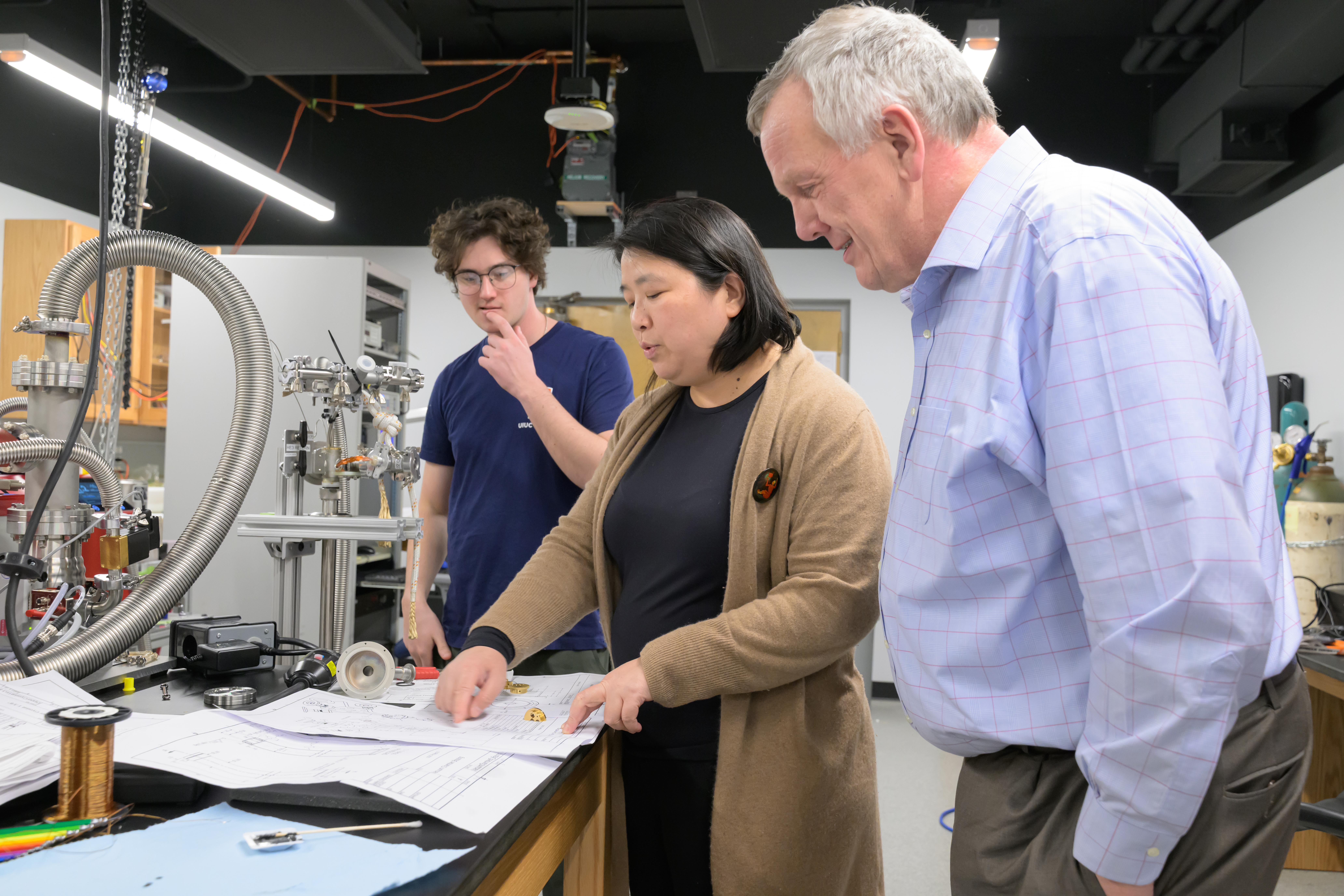
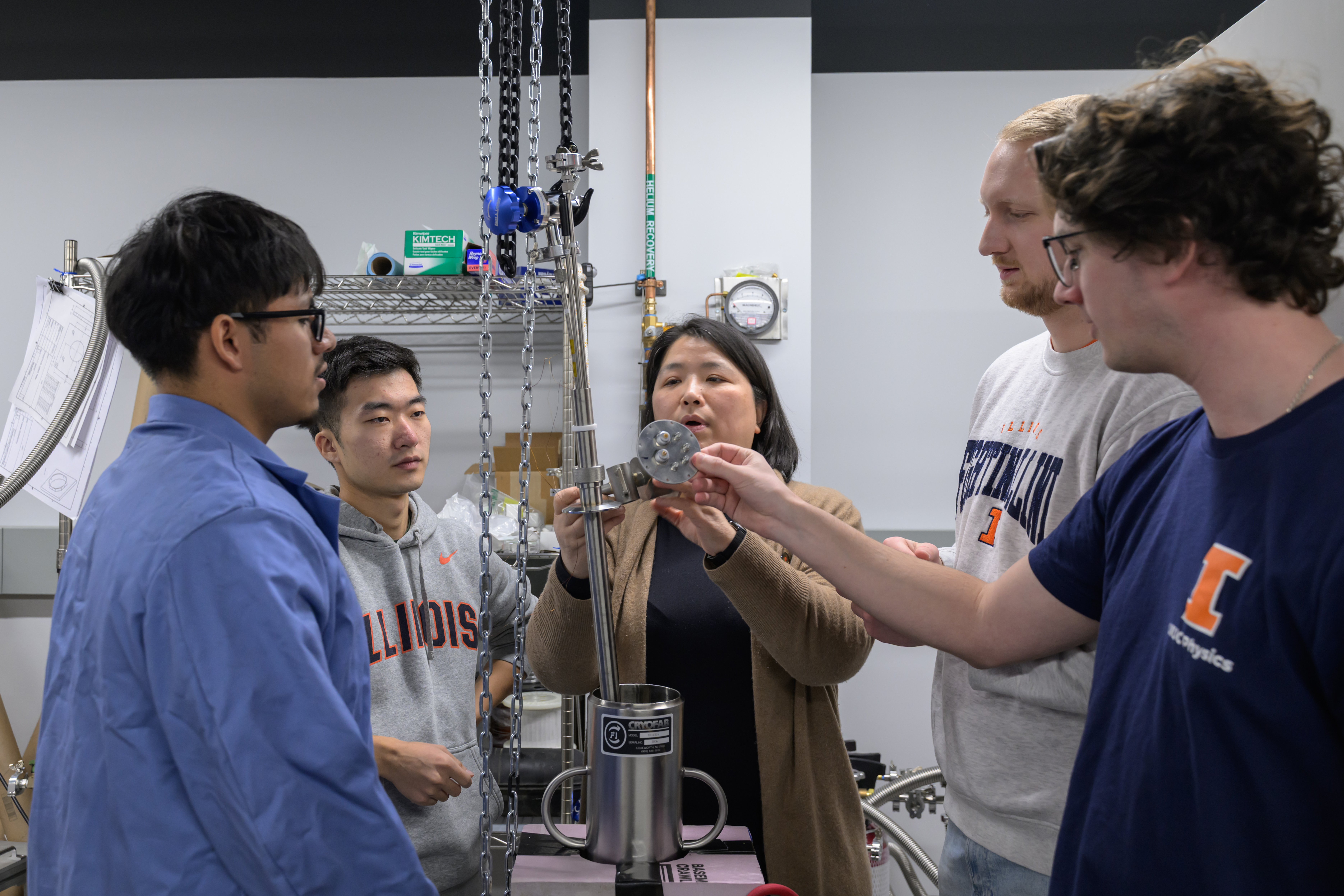
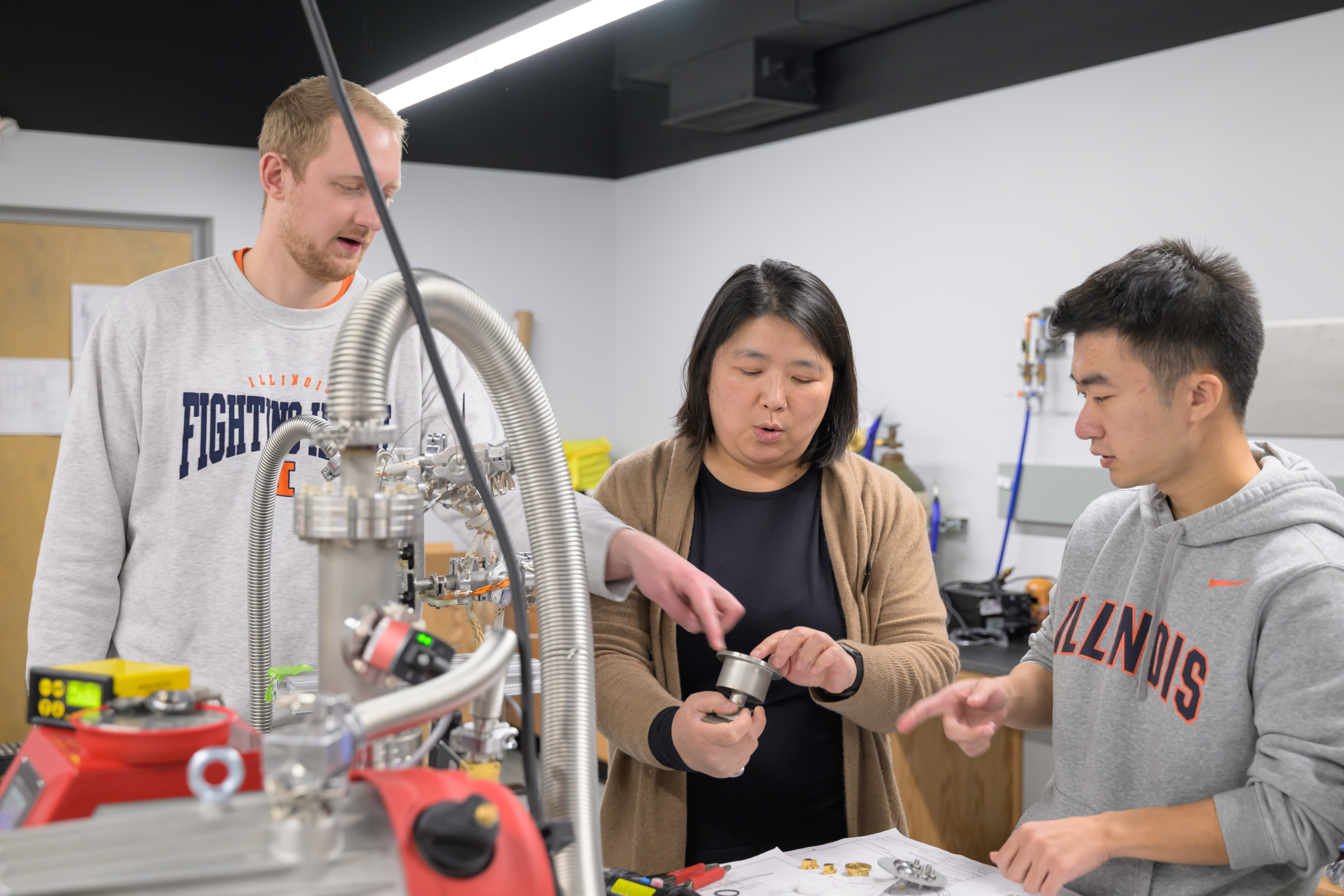
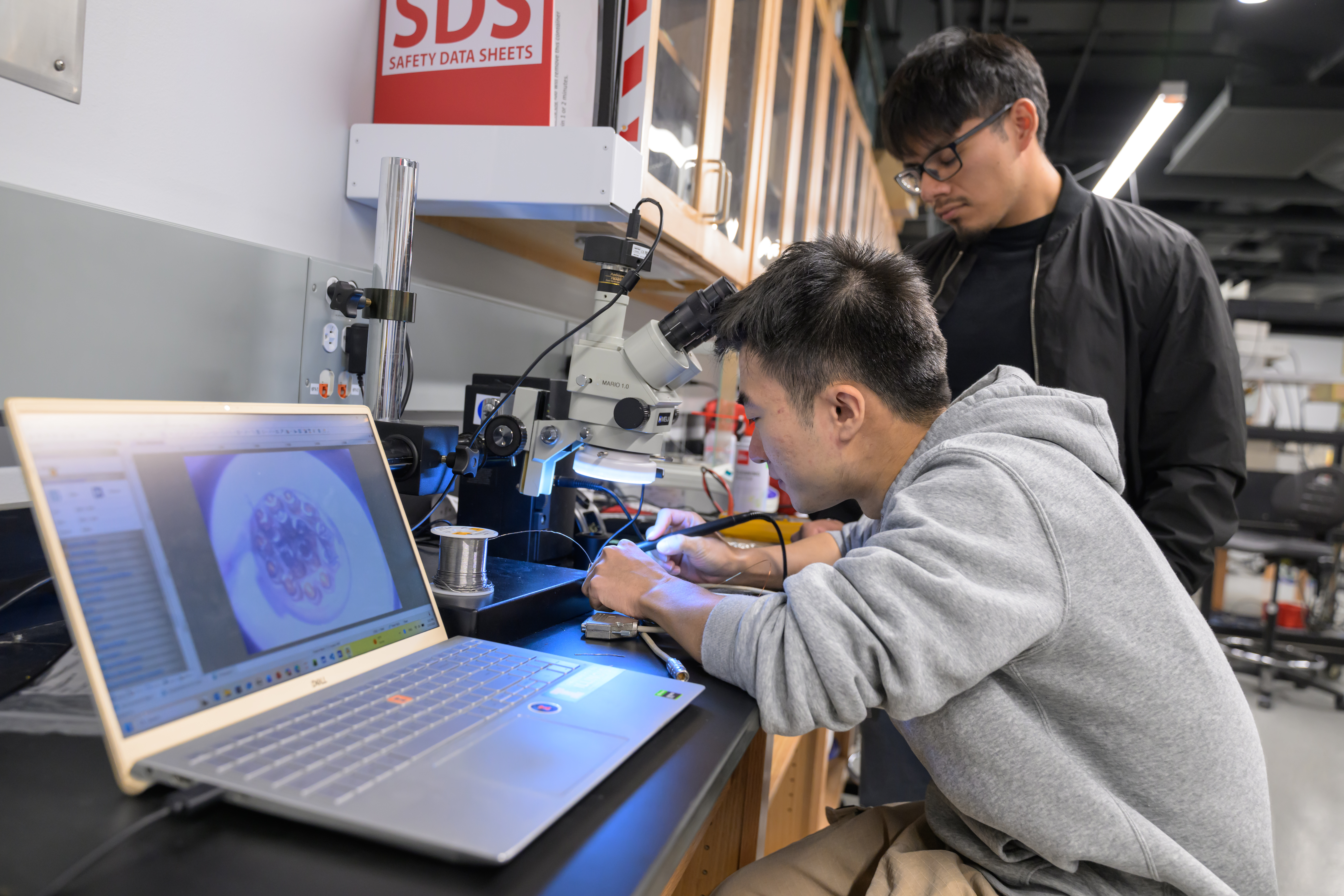
The centerpiece of our cryo-training module is a year-long project to construct a dilution refrigerator from scratch. Students will learn practical technical skills to design, construct, troubleshoot and solve problems needed to create a sub-Kelvin environement needed to operate quantum sensors. The MEng program also prepares individuals for diverse roles—ranging from cryogenic technicians to system engineers and applied scientists—while also ensuring adaptability as technologies evolve.
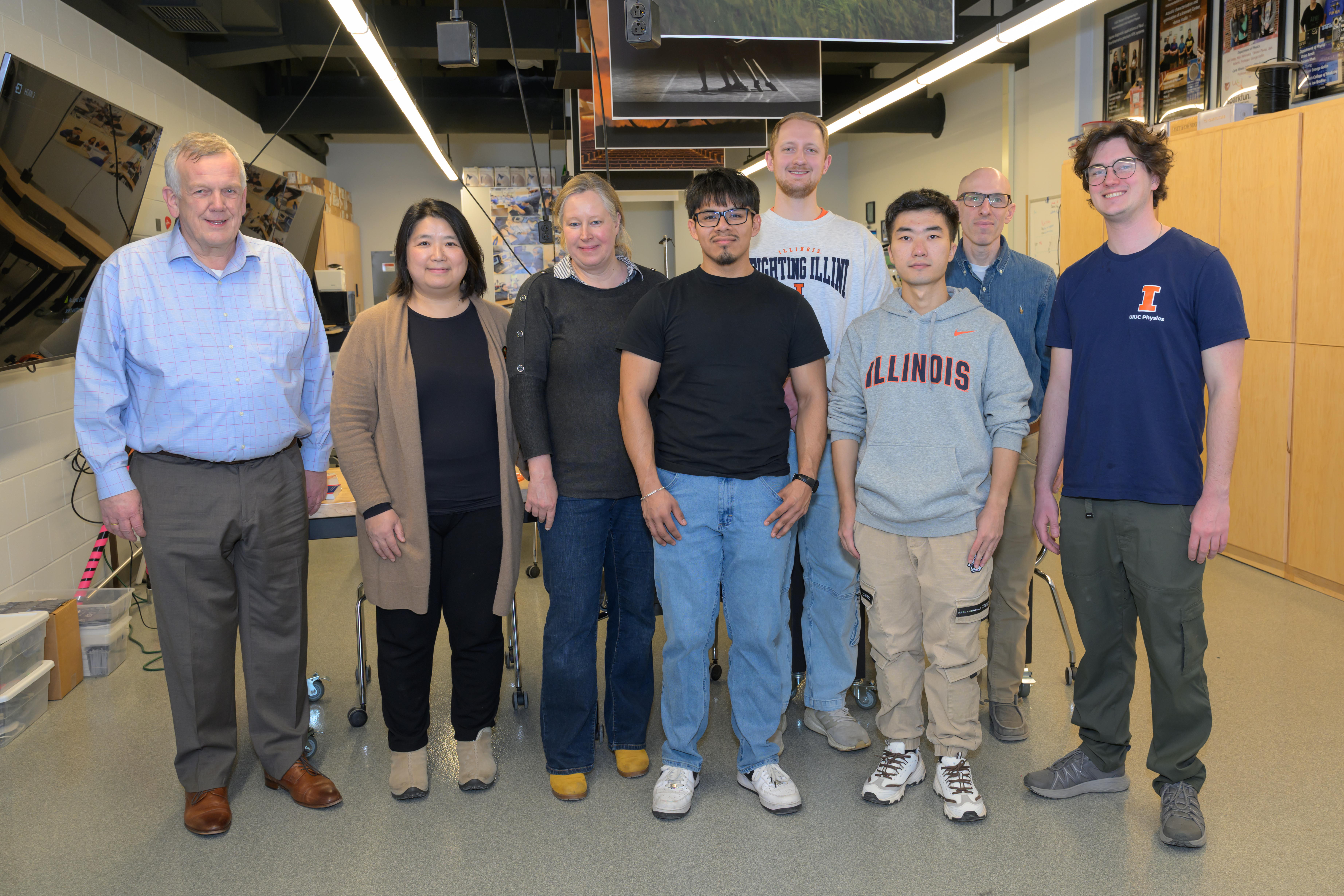
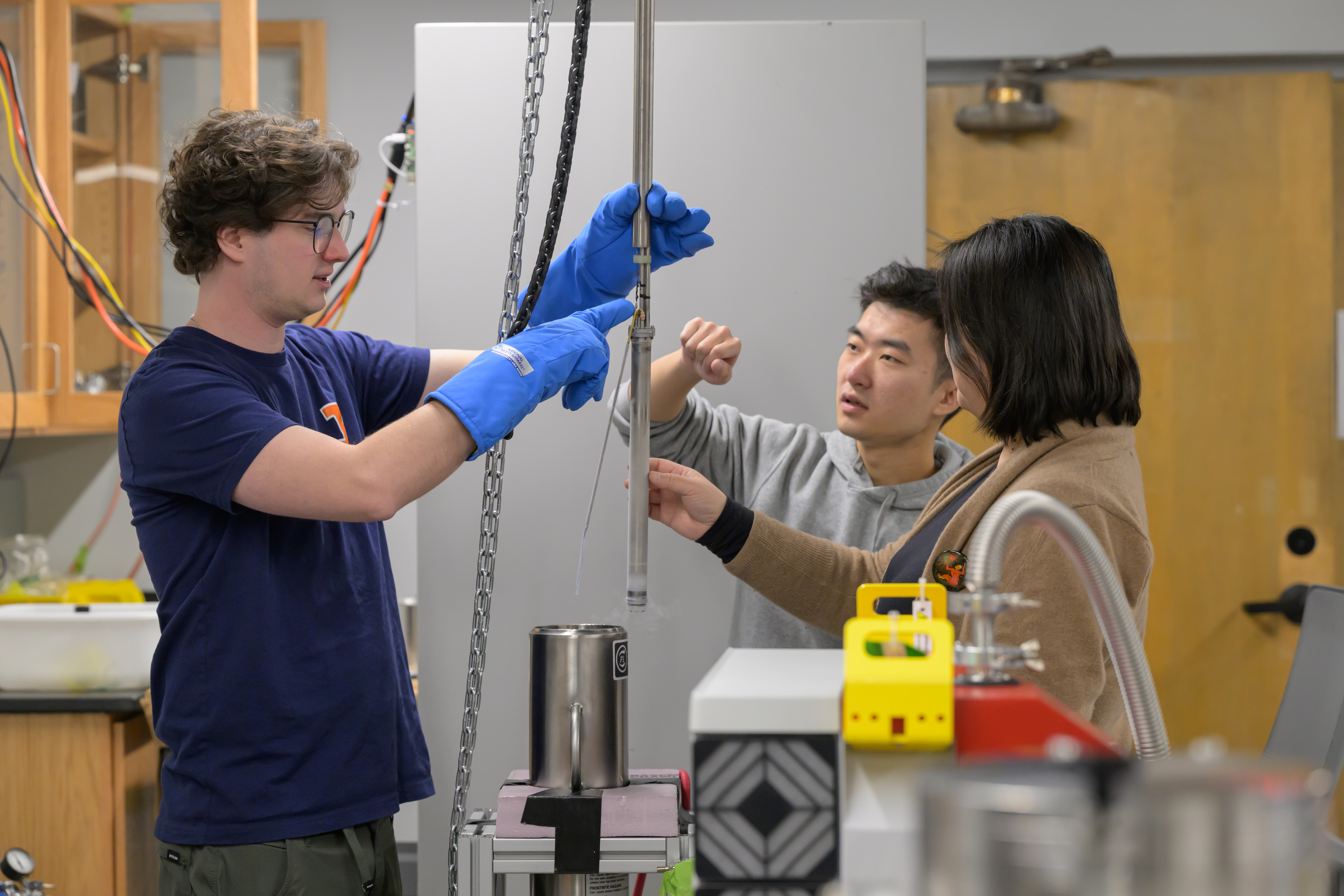
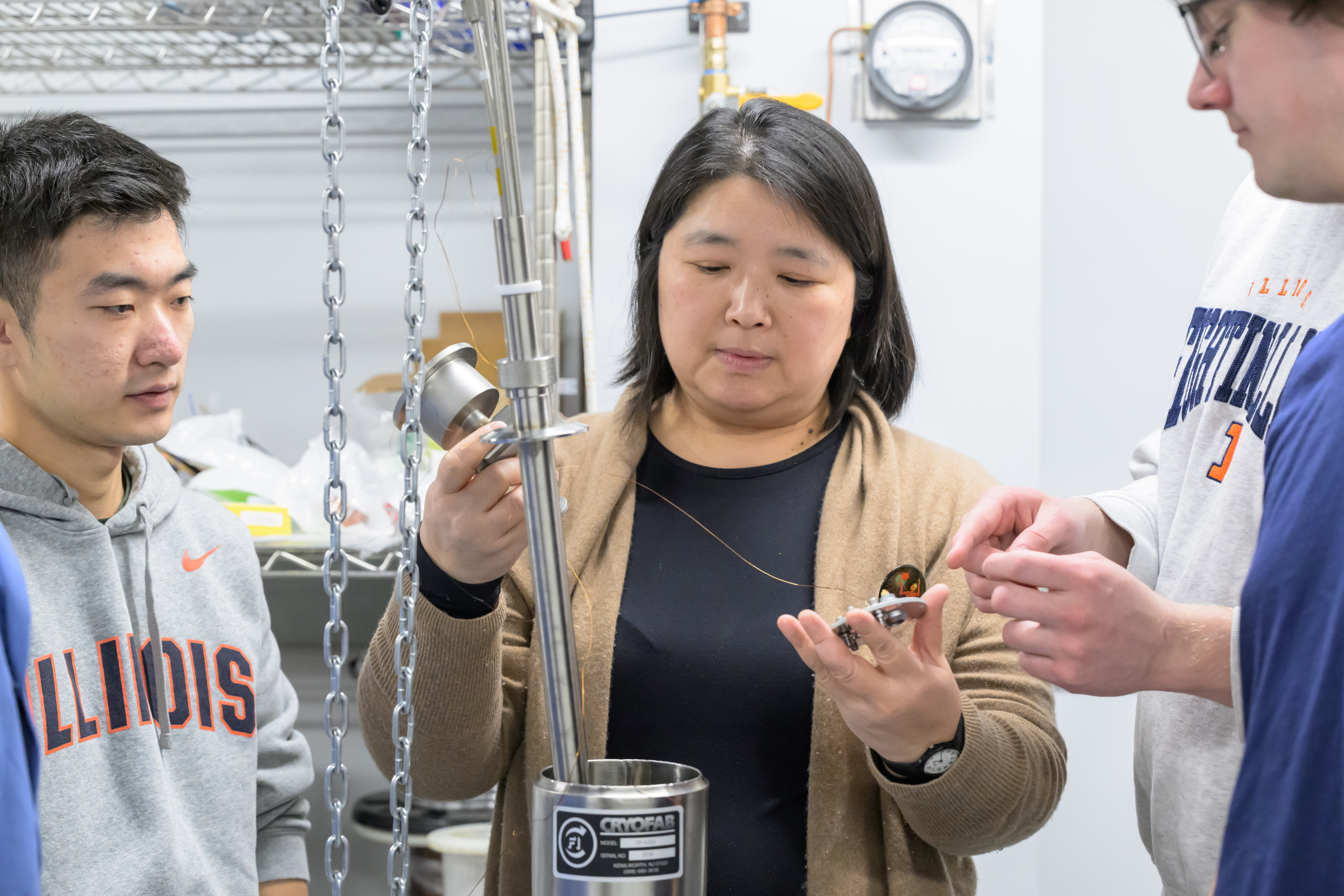
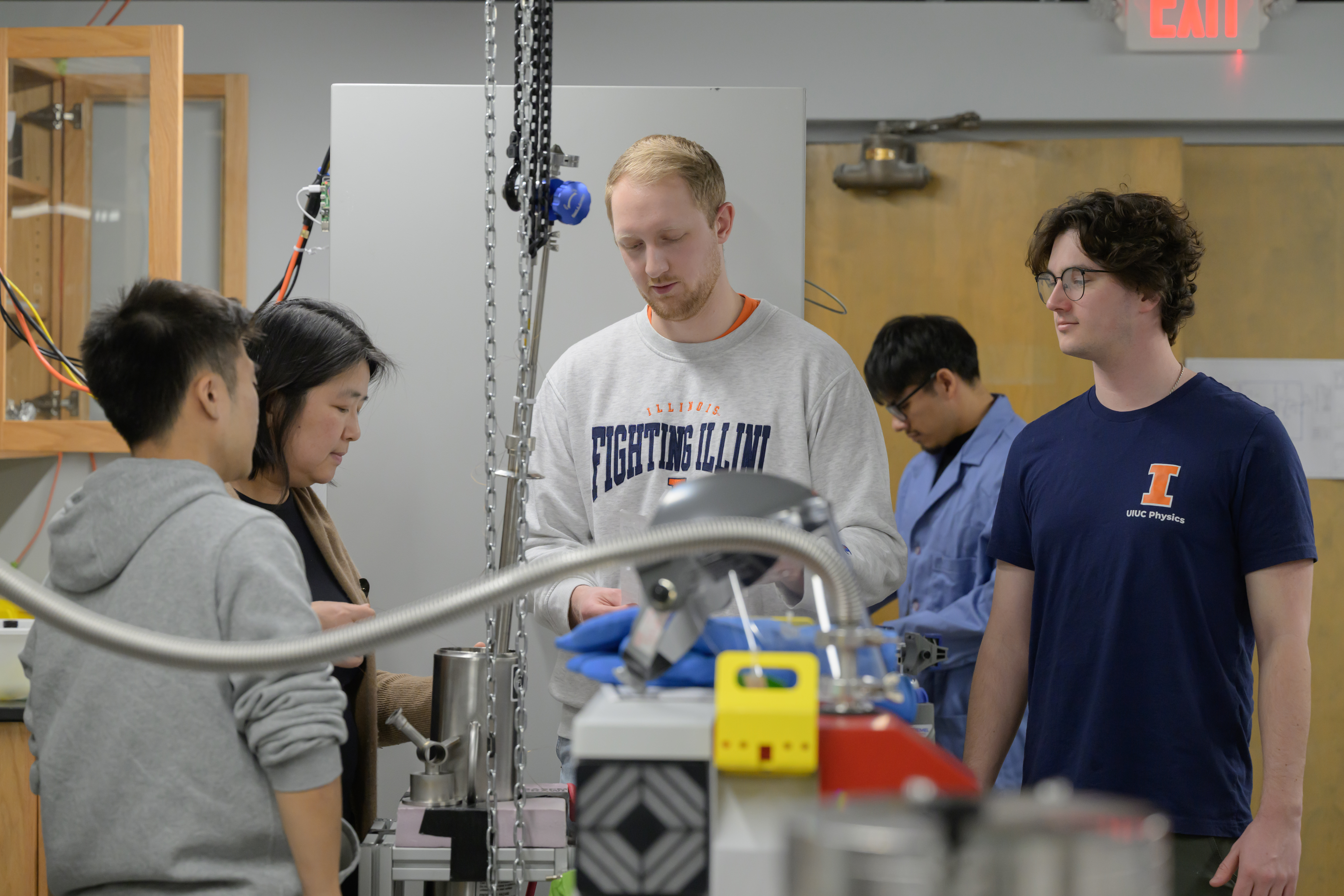
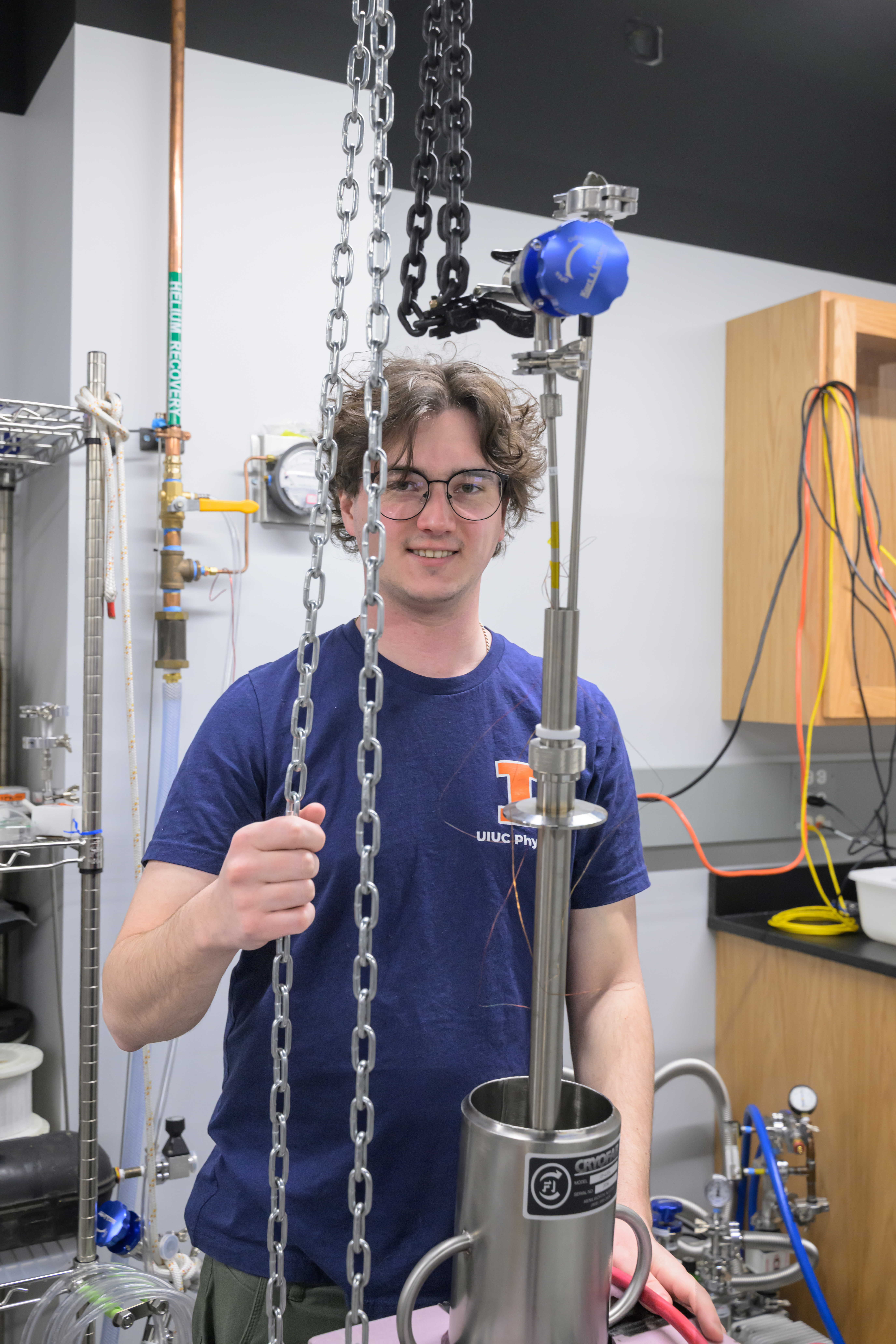
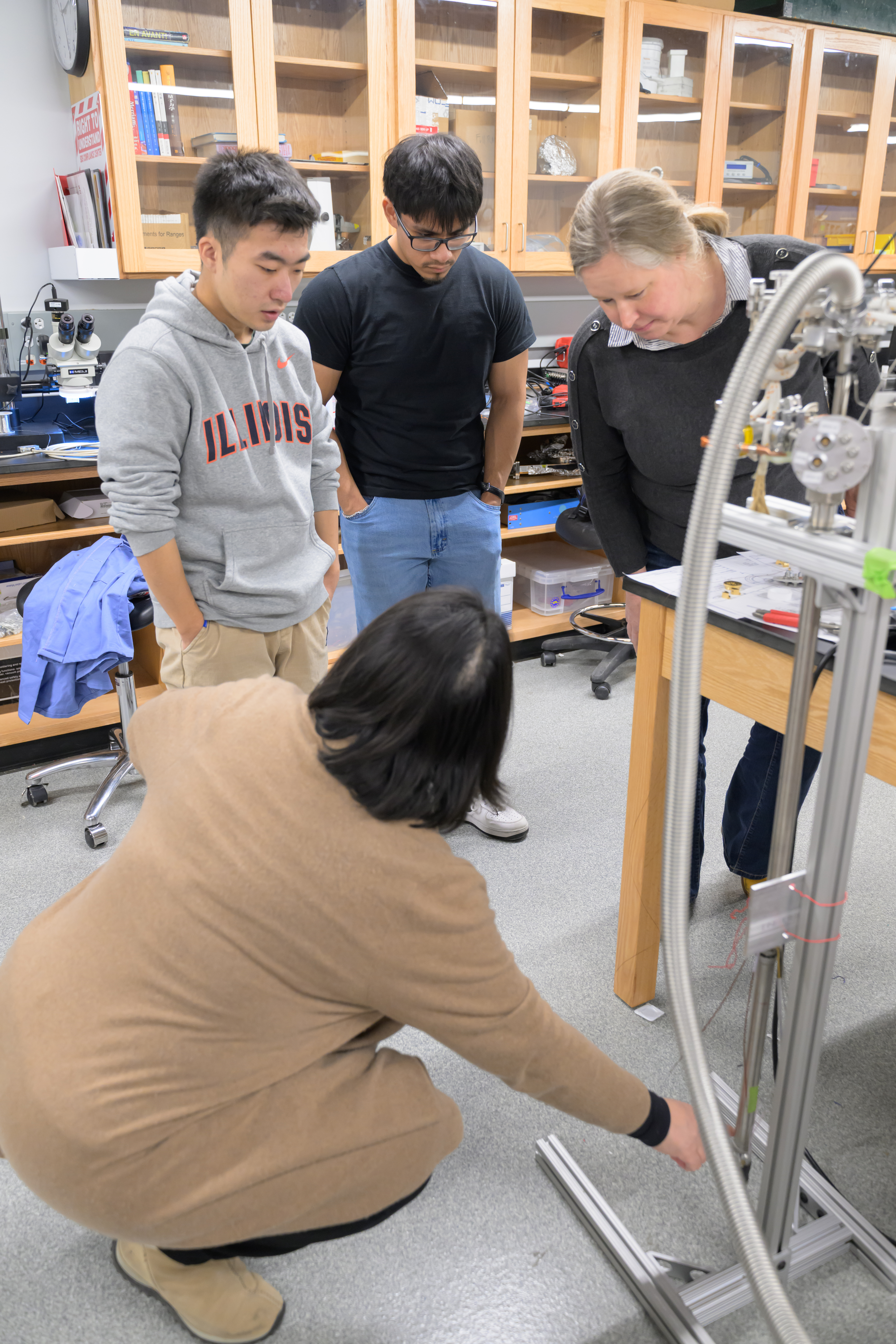
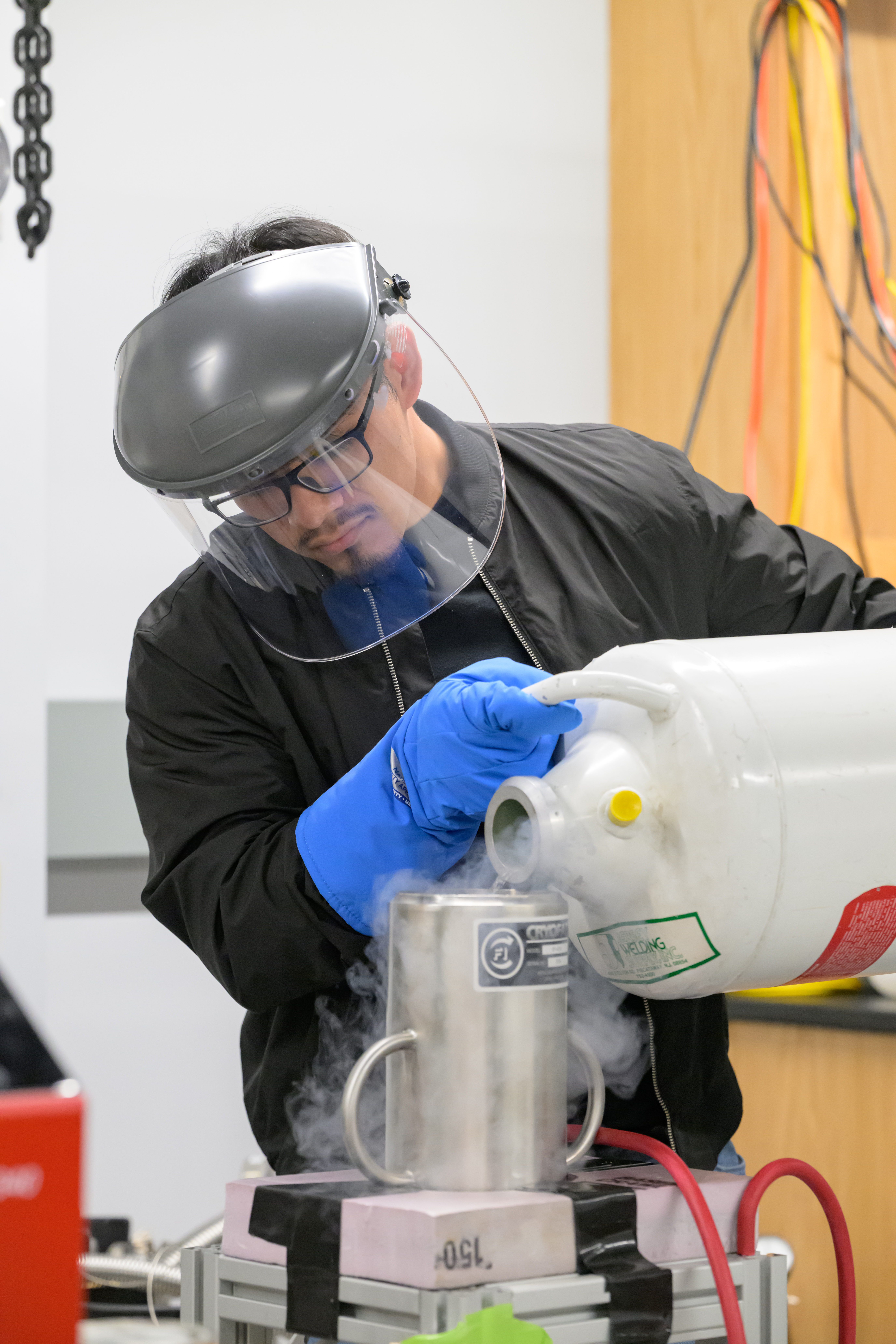
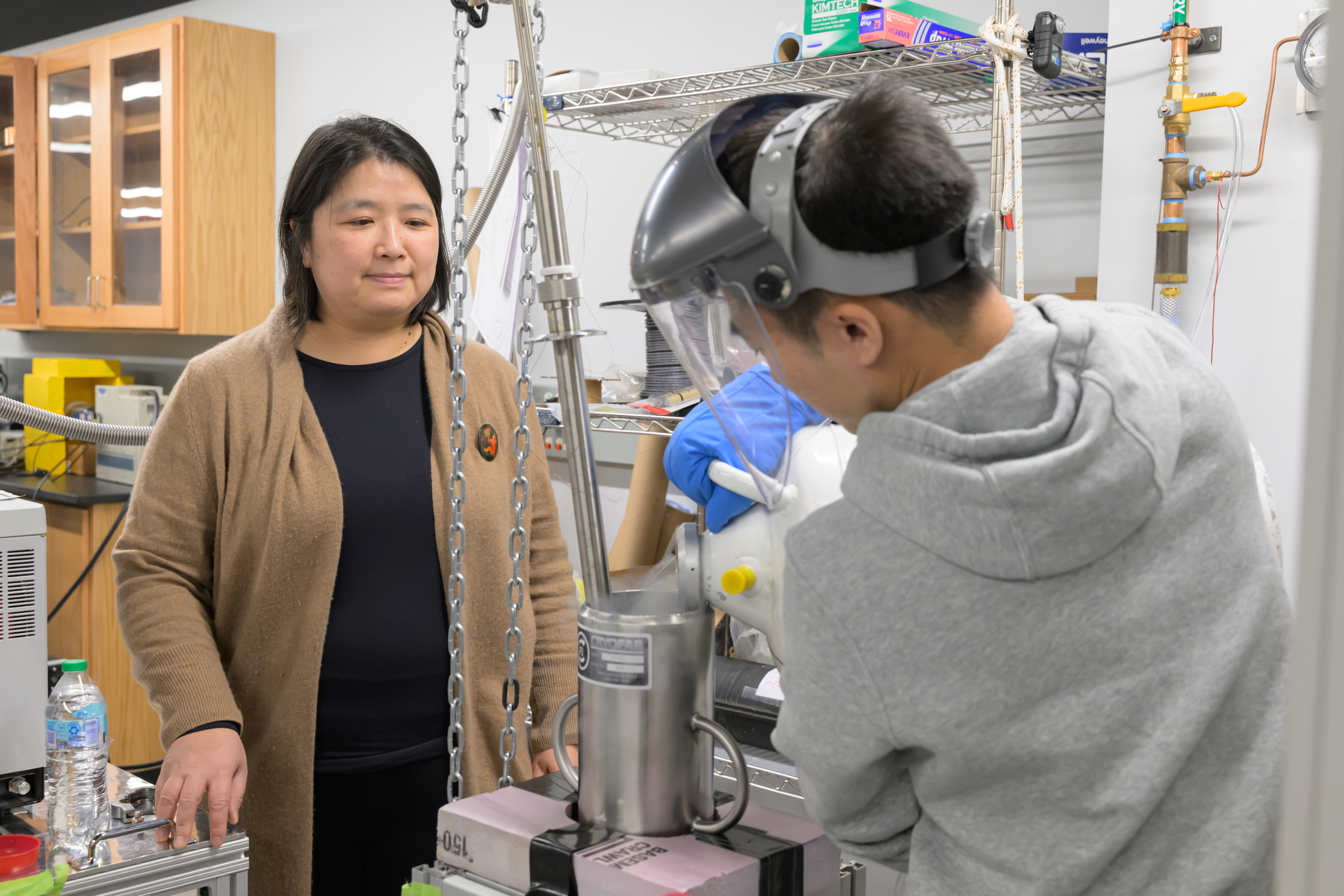
Photos of 2025/26 MEng program, cryogenic focus area
 |
 |
 |
 |
 |
 |
 |
 |
 |
 |
 |
 |
Muon Tomography for commercial and security applications
|
Muon tomography (or muography) is an imaging technique that uses cosmic ray muons to create images of the internal structure of objects by analyzing how these muons interact with matter through absorption or scattering. Cosmic muons are the final decay products of nuclear interactions of cosmic rays (nuclei or elementary particles) in our Earth's upper athmosphere. About one cosmic muon per second traverses an area of the size of a human hand on sea level. Muons, the "heavy siblings" of electrons, are point-like charged particles. They interact with matter electromagnetically. The effects exploited by muography include energy loss (top image) and trajectory deviation (bottom image). Since muons are highly penetrating, muography can image through significantly thicker materials than traditional methods like X-rays. This technique opens up a non-destructive way to investigate the density and composition of large structures, ranging from volcanoes over pyramids to nuclear waste and fissile material. [Click image for reference] |
 |
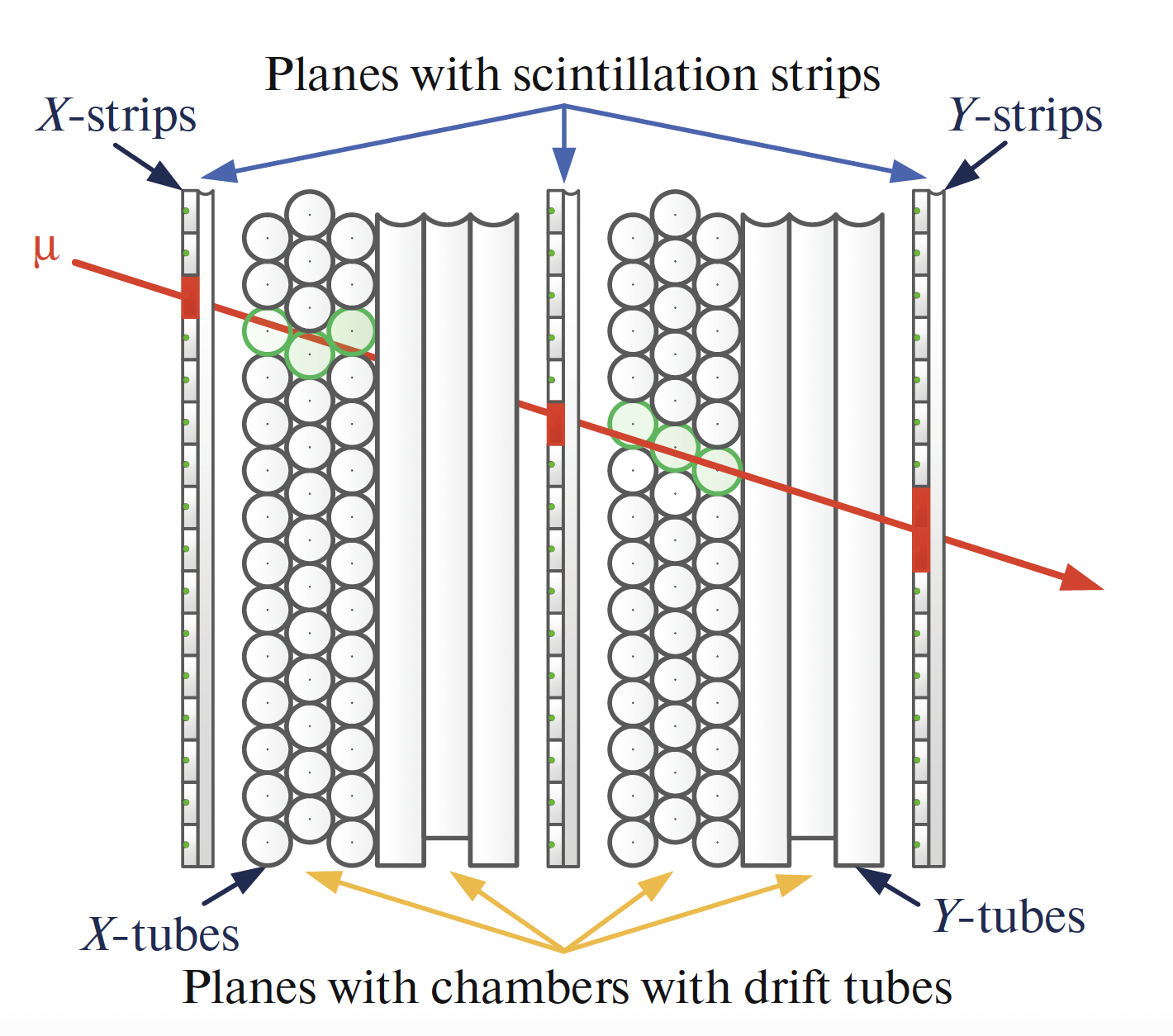 |
In this focus area, the students will, in collaboration with other students and instructors, build a muon hodoscope to image an object of their choice. The hodoscope will consist of layers of tracking and trigger detectors and its goal is to measure deviations of the trajectories of the incident cosmic muons caused by the object to image. To inform the design and materials of the hodoscope, construction will be preceeded by simulations to study the passage of charged particles through matter and R&D of a trigger scintillator and a tracking detector (for example drift tubes, see image). [Click image for reference] |
See the focus area Muon Tomography page for further course details.
Radiation monitoring for extreme environments
text under construction